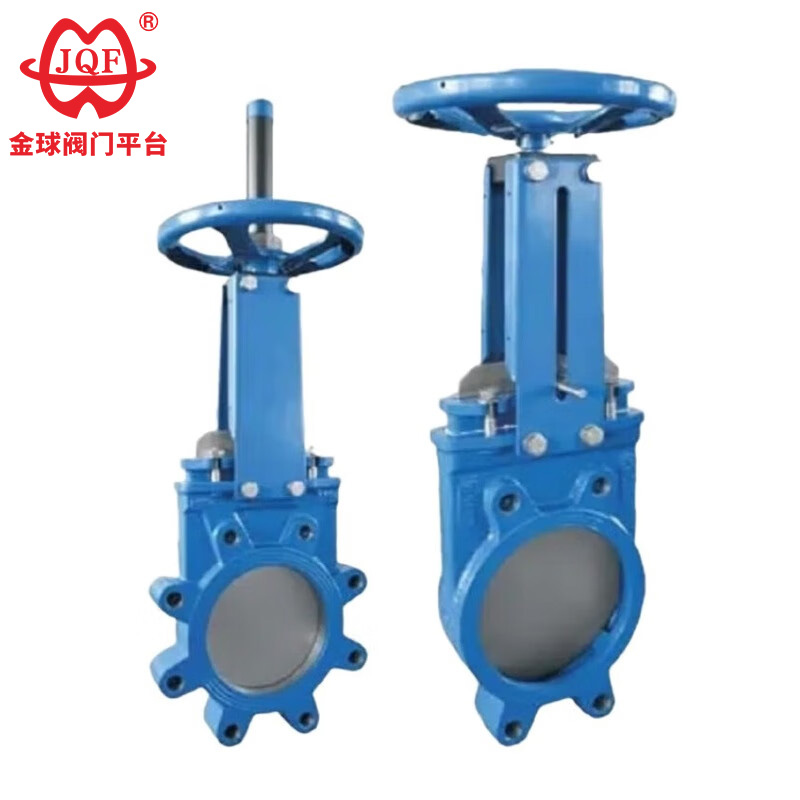

A Knife Gate Valve is a specialized isolation valve designed to handle difficult media such as slurries, powders, and fluids containing solid particles. In this comprehensive guide, we explain how a knife gate valve works, why it is essential in slurry and abrasive applications, and how to select the right design for your system.
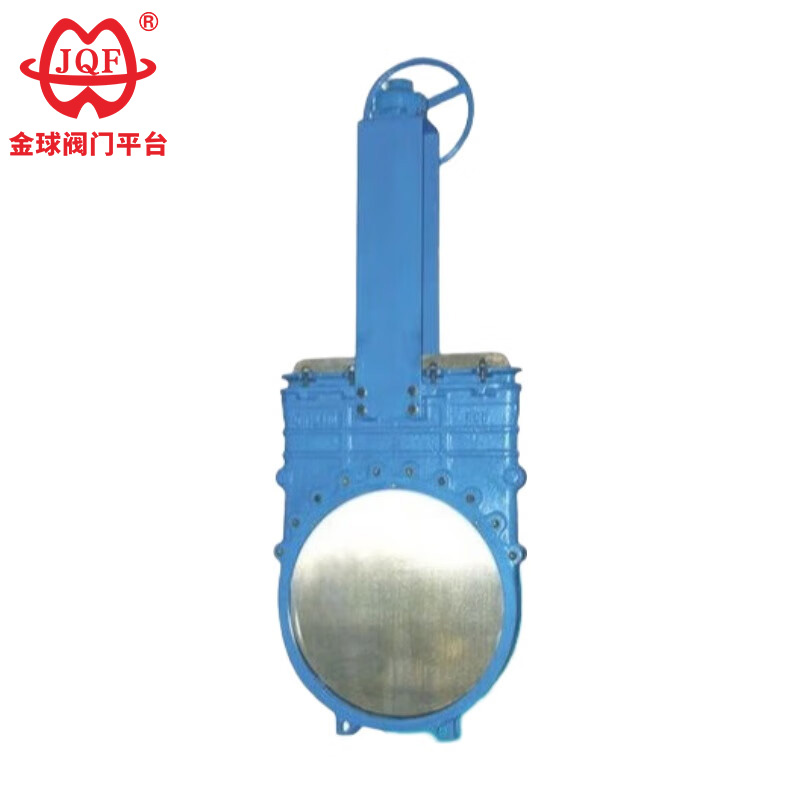
A Knife Gate Valve is a linear-motion valve designed primarily for on-off isolation rather than flow regulation. Its defining feature is a thin, sharp-edged gate (the “knife”) that cuts through thick media such as slurry, pulp, or powders.
Unlike conventional gate valves, a knife gate valve has a compact body and a straight-through flow path, which minimizes clogging. This makes it especially suitable for harsh operating environments where standard valves fail prematurely.
According to industry design practices and product specifications from knife gate valve manufacturers, these valves are widely used in industries where reliability under abrasive conditions is critical.
The working principle of a Knife Gate Valve is straightforward but highly effective. When the valve is actuated (manually, pneumatically, or electrically), the gate moves linearly up or down.
This cutting action is what differentiates a knife gate valve from other isolation valves. Even in high-solid or fibrous media, the valve can achieve reliable shut-off without excessive torque.
Manufacturers like JQF optimize gate thickness, seat material, and body geometry to ensure smooth operation and extended service life in demanding environments.
Slurry and abrasive media present unique challenges: erosion, clogging, and sealing failure. A Knife Gate Valve addresses these challenges through its design.
These features make knife gate valves indispensable in slurry pipelines, where reliability directly impacts production efficiency and maintenance costs.
A Knife Gate Valve is widely used across multiple heavy-duty industries:
In these applications, the valve’s primary role is isolation, ensuring safe maintenance and preventing media leakage under challenging conditions.
Knife gate valves are available in several configurations to suit different operating needs:
Selecting the right type depends on pressure rating, media characteristics, and installation requirements.
When choosing a Knife Gate Valve, engineers should consider the following factors:
Consulting with experienced suppliers such as JQF can help ensure the selected valve matches real-world operating conditions rather than just theoretical specifications.
Compared to ball valves or butterfly valves, a Knife Gate Valve offers:
While not designed for throttling, knife gate valves excel at reliable isolation in environments where other valves struggle.
| Parameter | Typical Range |
|---|---|
| Nominal Size | DN50 – DN1200 |
| Pressure Rating | PN6 – PN25 |
| Body Material | Cast Iron, Carbon Steel, Stainless Steel |
| Seat Type | Metal Seat, Soft Seat |
| Actuation | Manual, Pneumatic, Electric |
Knife gate valves are generally designed for low to medium pressure applications. For high-pressure systems, special reinforced designs are required.
No. A Knife Gate Valve is intended for on-off isolation, not throttling or precise flow regulation.
Maintenance frequency depends on media abrasiveness and operating cycles. Proper material selection significantly reduces wear and downtime.
Understanding how a Knife Gate Valve works and why it excels in slurry and abrasive applications is essential for engineers and procurement professionals. With the right design and material selection, these valves deliver long-term reliability and operational efficiency.
If you are looking for a dependable knife gate valve solution backed by real manufacturing expertise, JQF is ready to support your project. For technical consultation, customized solutions, or quotations, contact us today and let our team help you optimize your system performance.